
Natural Flood Management: Exploring the Investment Case
Our two nature-finance leads, Michael Smith and Hannah Needham, dig into the topic of natural flood management (NFM) and what it takes for these powerful nature-based solutions to be appropriately valued and financed.

How can we appropriately value nature-based interventions to scale up investment?
When you think of flood management, you might picture sandbags, concrete walls or large dams - classic examples of hard engineering. While these can be effective as protection of our most vulnerable areas and assets during extreme weather events, they can be incredibly costly and don’t effectively deal with the issue at source.
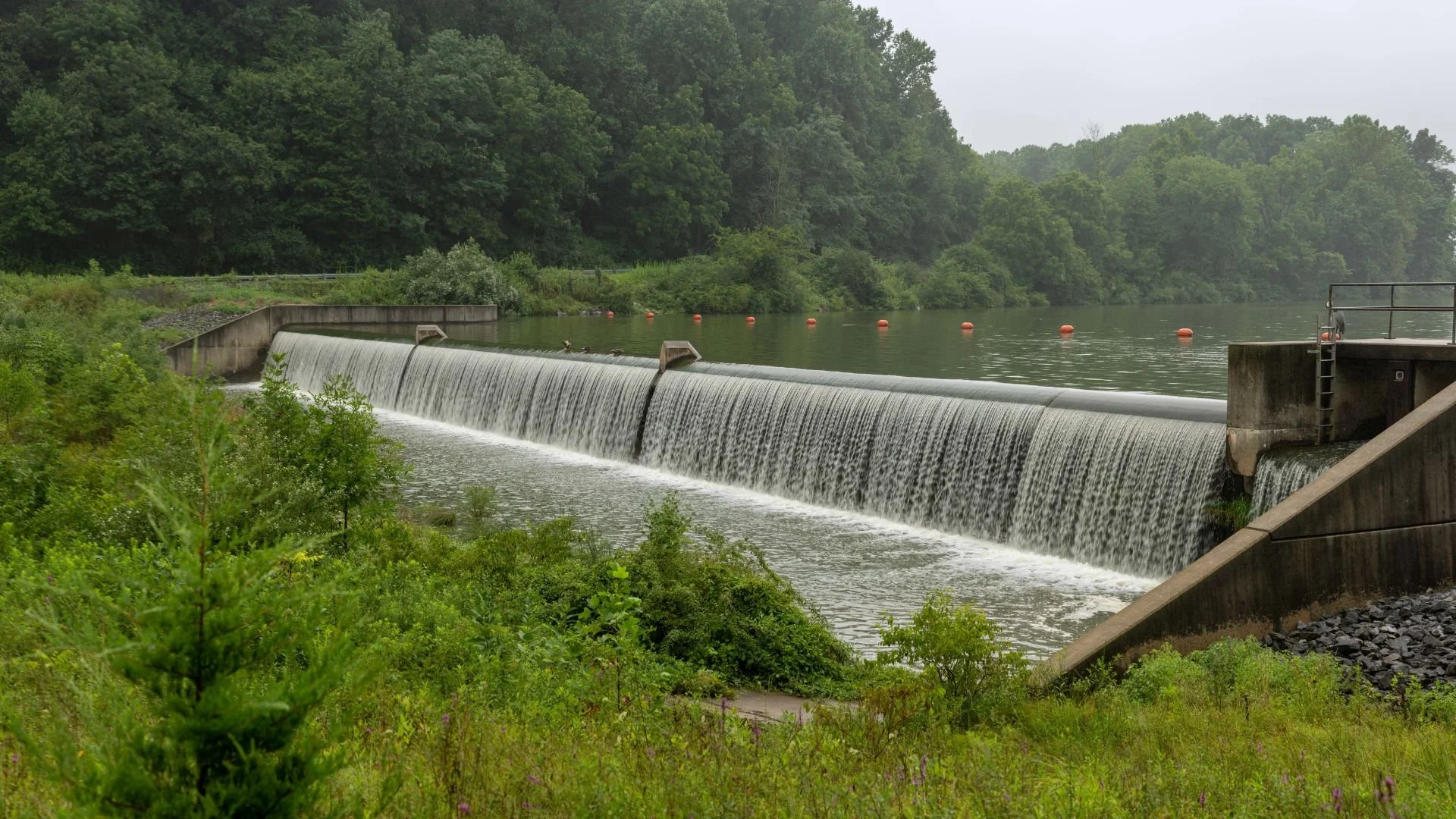
Hard engineering is often deployed to reduce flooding in high-risk areas
Every river catchment in the UK has untapped potential for ‘natural flood management', an emerging technique which retains water in the tributary system, reducing peak flow rates and lessening the impacts of flooding downstream during high rainfall events. This is achieved through techniques such as creation of scrapes and wetlands, reprofiling of rivers to restore natural functionality and increase channel length, and by managing soil in floodplains to store more water. Likewise, structures like leaky woody dams - patented of course by nature's top engineers, beavers - can be installed at strategic locations to reduce flood peaks, filter out sediment and excess nutrients, and provide new habitat for aquatic species such as dragonflies, frogs and newts. These additional benefits add real value, particularly as 90% of freshwater habitats in the UK have been lost in the last century and 10% of our freshwater species are threatened with extinction1.
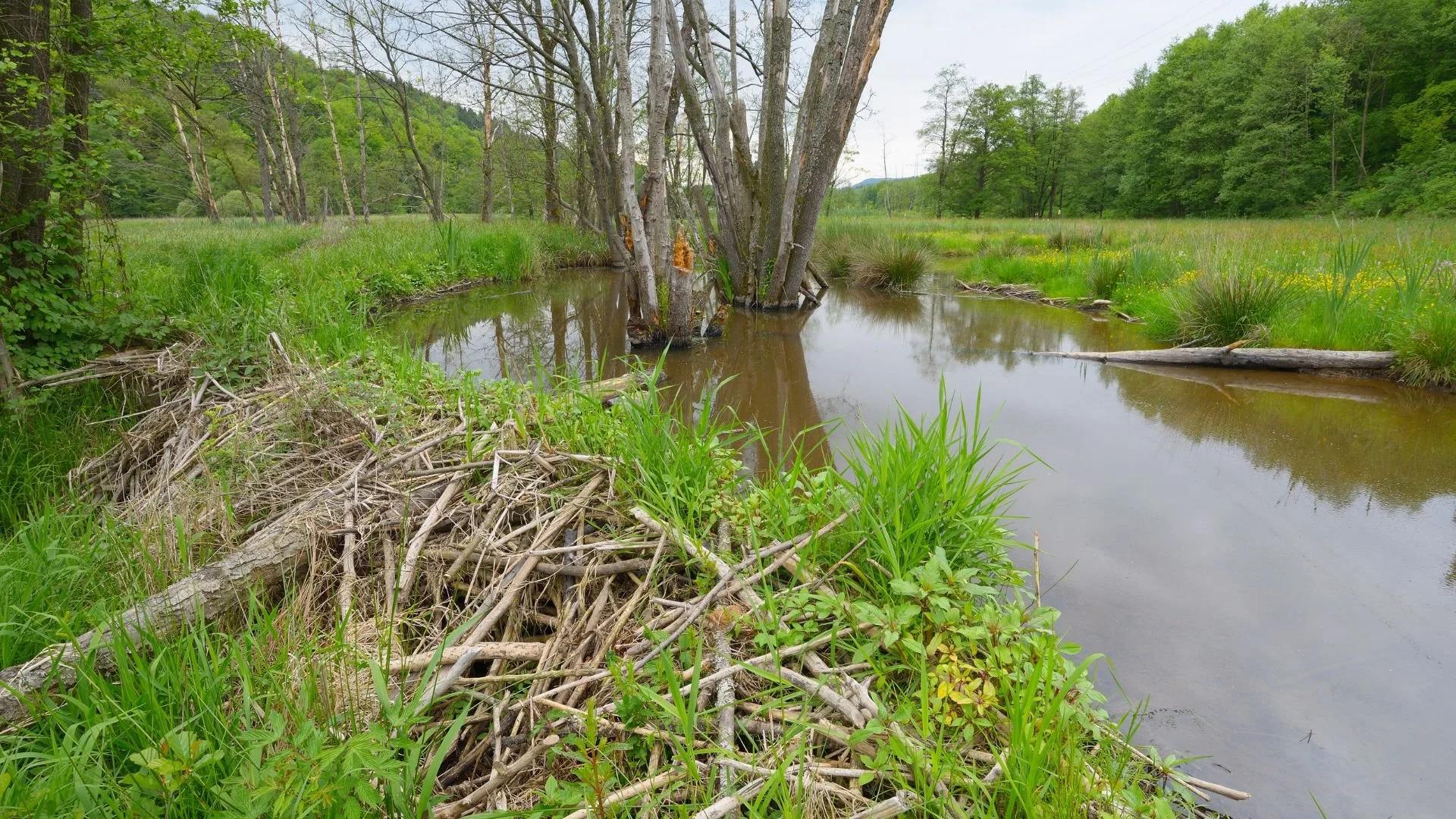
Beaver dams hold water, trap sediment and filter nutrients.
The problem is, while the value of a concrete wall is undeniable in flooding events, the benefits of healthy soils or land management practices are widely underappreciated as a flood risk reduction tool. Many models exist to help make the case for NFM, and a recent Review of natural flood management in Wales: final report was produced by our friends at JBA Consulting. It notes “There is, however, a general lack of quantified expected flood risk management benefits delivered by NFM, together with the associated detail regarding the modelling approaches used.”
What are the ‘goods and services’ from NFM?
Given that NFM is primarily about risk reduction, it naturally presents an opportunity to attract private investment. The first step to attracting investment is to understand the beneficiaries and the goods and services on offer to them. In the case of NFM, it delivers a variety of wins for multiple stakeholders including:
Reduced flood risk for vulnerable urban areas and assets, lowering cost and risk to local communities, businesses, authorities and infrastructure impacted by flooding.
Restoration of freshwater habitats, supporting a wide range of species and recovery of one of the UK’s most threatened ecosystems.
Social benefits - who doesn’t love spending time near water! The creation of new ponds and wetlands and, where possible, replacement of hard infrastructure with naturally meandering rivers will provide new routes for improved wellbeing and nature connection.
How is NFM funded now?
Currently, NFM projects are primarily funded through grants for feasibility and/or design, and these are typically provided by government or charitable bodies. For example:
18 of the recent Natural Environment Investment Readiness Fund projects, which received up to £100,000 per initiative, had an NFM element.
Under its Landscape Recovery scheme, Defra has awarded 55 landowner collaborations up to £750k for feasibility and design for delivery of nature recovery at scale. Approximately half of the projects are facilitated by the Environment Agency due to their focus on rivers and wetlands.
NFM-specific grants such as The Herefordshire NFM construction Grant Scheme, Natural Flood Management Innovation Fund and FCERM all fund NFM projects.
- Agri-environment grants also provide opportunities to deliver small-scale NFM actions at individual farm-level, particularly new rates for Countryside Stewardship Higher Tier2.
Case Studies
Case study A: The Wyre
The Wyre project has been held up as an exemplar as to how an NFM project can leverage a blend of public and private sector funding, including investors and buyers of ecosystem services, and work with landowners to deliver nature-based solutions. It aims to reduce flood risk in the village of Churchtown and other communities downstream, while generating co-benefits for biodiversity, water quality and carbon sequestration across the catchment.
Spearheaded by The Rivers Trust and the Wyre Rivers Trust, and with support from Triodos Bank, the Esmée Fairbairn Foundation, the Environment Agency and other funders, the project has pioneered the use of an Environmental Impact Bond to mobilise upfront capital3. This mechanism allows investors to be repaid based on the delivery of measurable environmental outcomes, with a focus on peak flow reductions. To raise the required £1.48 million, the team are using a ‘blended finance’ mechanism which includes leveraging the Social Investment Tax Relief to attract private investment (investors get 30% tax refund on investment) and allocating a selection of risk reduction measures for different stakeholder groups to encourage sign up.
Landowners are engaged in the project through bespoke legal agreements which commit them to build leaky dams, plant trees in riparian zones, restore wetlands and deliver other NFM measures. Crucially, the project has helped to demonstrate a replicable model for green finance that aligns natural capital improvements with risk reduction and return on investment, laying the groundwork for future catchment-scale interventions across the UK. The Wyre Rivers Trust is responsible for performance monitoring using equipment such as flumes, level loggers, topography surveys, timelapse photography and rainfall to report on the effectiveness of the interventions at reducing or delaying peak flow during a 1:50 year flood event, with a target to reduce peak flows by 5-15%4 Successful flood risk reduction then drives revenue that is distributed to participating landowners.
Case study B: Holnicote Stage Zero
The National Trust were the first in the UK to deliver ‘Stage 0’ river restoration in the UK, a technique first pioneered in Oregon, USA that caused much excitement and debate among British hydrologists. The approach involves completely resetting the landscape by filling in the river and levelling the floodplain, allowing the water’s natural flow to re-carve the channel – a real example of ‘nature-based’ interventions. This was trialled at the Holnicote Estate in Devon in 2023, applied to a 1.2km stretch of the artificially straight and overly deep River Aller.
The results were spectacular, as natural processes created seven hectares of new wetlands and scrapes. Researchers from the Universities of Exeter, Loughborough, Nottingham and Umeå (in Sweden) have been studying the impact of the interventions on water flow, water quality and biodiversity. The team found that 25,000 m3 of water was stored in new habitats, flood peaks were on average 38% lower during high rainfall events, water turbidity (cloudiness) decreased by 41%, groundwater levels rose dramatically up to 1 metre, sediments and nutrient deposition was reduced and the amount of aquatic habitat increased by 1780%5. The project is widely regarded as a success, with the downstream towns of Allerford and Bossington benefitting from reduced peak flows.
The EU’s Interreg 2 Seas Co-Adapt programme was the major funding partner, with Somerset Rivers Authority providing ~40% of funds for NFM delivery. The team have not published an economic valuation or details about long-term funding. However, the Holnicote Estate is part of a Round 1 Landscape Recovery project which aims to deploy public and private finance to support long-term habitat restoration and management. Round 1 projects are expected to progress from feasibility to implementation in 2025-2026, so more details on the funding mechanisms behind this project should be available soon.
Case study C: Wendling Beck
The Wendling Beck Environment Project is a pioneering example of how landscape-scale nature recovery can be delivered through collaborative land management and innovative finance. Located in Norfolk, the project brought together four landowners, local authorities, and environmental NGOs to restore 5,000 metres of river and over 2,000 acres of farmland. The project created a variety of species-rich habitats including 6 acres of rare fen wetlands, 80 acres of meadows, 2 acres of wet woodlands, and 65 acres of heathland6. Project outcomes to date include biodiversity uplift (over 3,000 Biodiversity Net Gain units), improved water quality, and 250,000 tonnes of carbon sequestration while integrating regenerative agriculture and enhancing climate resilience.
Wendling Beck successfully blended public funding with private finance, securing £750,000 of funding, including £100,000 from Defra’s Natural Environment Investment Readiness Fund and £5,000 from local charities, with the remainder made up of grant, pro-bono, philanthropic support and landowner contributions7. The project serves as a blueprint for how landowners can work collectively to align environmental outcomes with financial sustainability and demonstrates the potential of natural capital approaches at catchment scale.
How can we build on our achievements to make NFM investable?
The first step to attracting investment is to understand the beneficiaries. One of the main beneficiaries of flood risk reduction is the insurance sector. In 2024, the UK insurance sector paid out over £650 million in claims for flooding related expenses8. Another key beneficiary is local authorities and housing developers. On the Mayes Brook, river restoration was valued at £7.8 million over 100 years, based on the uplift to property prices, with maintenance payments post-restoration reduced by 50%9. Furthermore, a 2025 report commissioned by RSA Insurance and The Wildlife Trusts showed that every £1 invested in NFM is expected to deliver £10 of benefits over 30 years. Why, therefore, are the majority of NFM projects funded by government and charitable grants where they aren’t the ones that primarily benefit?
To make a clear investment case to the insurance sector, NFM projects need to demonstrate that their interventions reduce flood risk and that the flood risk benefits can be reliably and robustly quantified. To date, few projects have been able to justifiably make the business case for NFM, due to a myriad of factors. Complex flood modelling, high monitoring costs and limited funding opportunities have restricted the availability of high impact case studies. Attribution is key. We need stronger evidence, better models and standard monitoring frameworks to quantify flood risk benefits. Although it’s widely understood that NFM can reduce flood risk and deliver additional environmental and socioeconomic gains, investors will only commit when we provide reliable data to make the business case for NFM. Although the evidence base for NFM continues to grow and encompasses a range of measures, critical gaps remain including mechanisms to model and quantify of risk reduction benefits10.
One significant and distinctive advantage of NFM is the wide variety of associated environment and socioeconomic co-benefits. Hard infrastructure only delivers flood protection when high rainfall events are at their peak (and, in most cases, provide an unsightly view). With nature-based infrastructure, flood and drought resilience is built all year-round and a whole host of other benefits are generated such as water filtration and species gains. There are times when hard infrastructure will be required, but it’s important to consider it is not the only option for reducing risk, and perhaps there are other solutions that are less proven.
Projects should be judged on the scale, impact and longevity of the proposed interventions. The better the interventions, the bigger the environmental outcomes and, in the context of private nature markets, the more funding is available to landowners for NFM delivery and long-term maintenance. In turn, risk payouts for insurers and damage to local business and residents is reduced in the long-term. Therefore, if designed correctly, these cost savings are ultimately used to cover the cost of implementing those interventions while generating a variety of co-benefits.
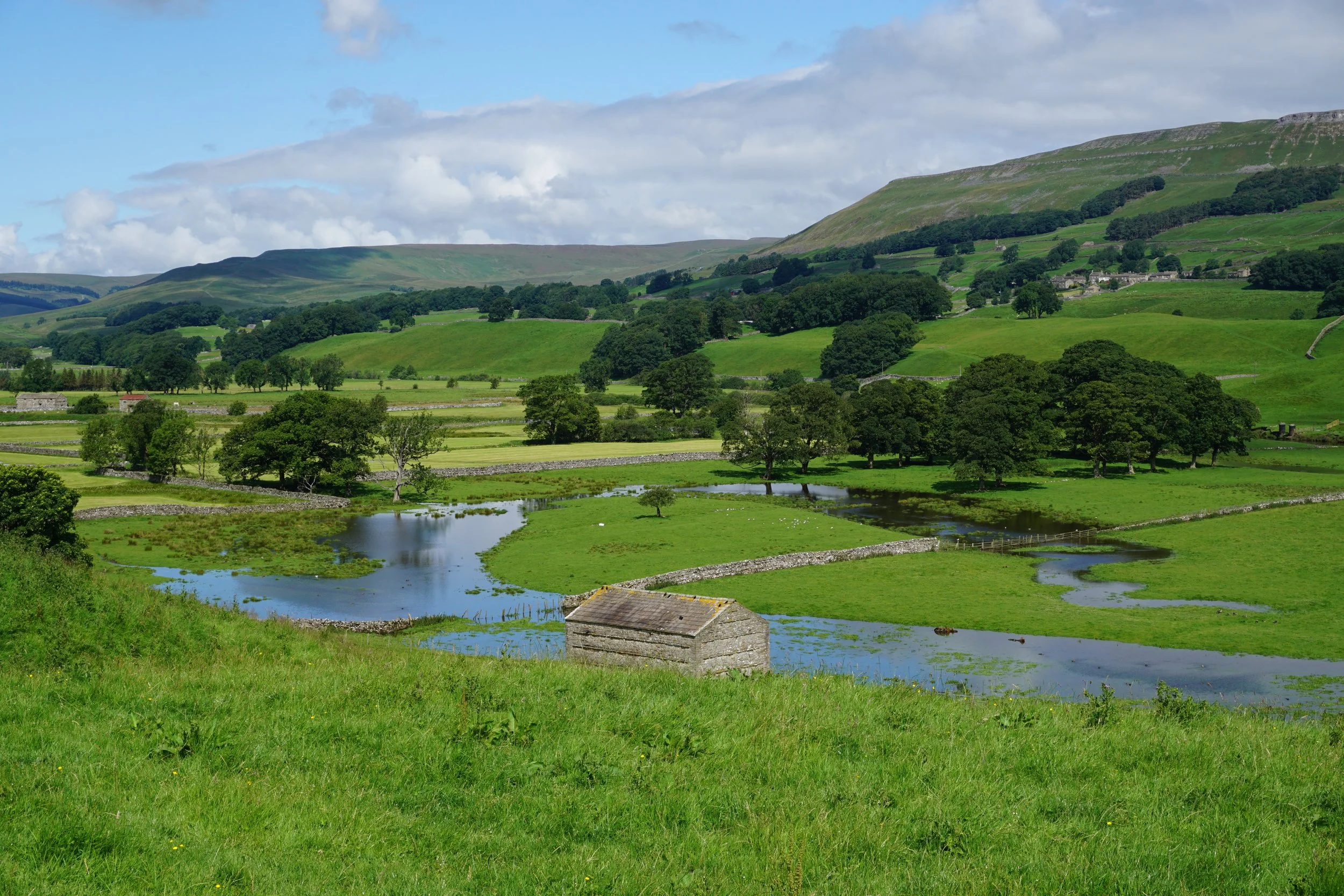
The River Ure in North Yorkshire, part of the Ure Dales Landscape Recovery project
Innovation in action: making the business case for NFM
In the UK, several initiatives were recently formed to unlock funding for large-scale delivery of nature-based solutions.
Landscape Recovery Projects
Defra has awarded funding to Landscape Recovery projects across England, with 22 Round 1 projects announced in 2022 and 34 Round 2 projects announced in 202311. The aim is to deliver landscape-scale restoration by securing public and private funding for 20+ years for delivery of ambitious environmental outcomes. Many projects are working at catchment-scale to deliver natural flood management benefits. “Restoring England’s streams and rivers” was one of two themes in Round 1, and the funded projects span nearly 700km of rivers. Defra tasked the project teams, who are typically collaborations led by charities and/or farmer clusters, to establish new mechanisms for private investment into nature recovery. Typically, projects seek to secure long-term funding from local beneficiaries such as water companies, local authorities and local businesses.
In our experience contributing to 10 Landscape Recovery projects to date, level of interest and willingness to commit funding varies enormously from catchment to catchment. Key factors include levels of demand for ecosystem services via compliance markets (e.g. Biodiversity Net Gain - BNG), the financial position of beneficiaries (e.g. funding cycles, shareholder interests) and extent to which the project can evidence potential impact for beneficiaries. With routes to market differing greatly between regions and across different stakeholder groups, no one-size-fits-all blueprint will emerge from Landscape Recovery. However, with Round 1 projects due to complete feasibility this year, several interesting case studies are expected to emerge which could be upscaled and replicated.
LENs
Landscape Enterprise Networks (LENs) was formed in 2019 to drive the delivery of nature-based solutions including natural flood management. The LENs framework creates a marketplace, bringing together regional beneficiaries with shared risks and/or objectives with landowner aggregates in strategic locations. Demand-side entities such as utility companies, agrifood corporations, local government and property developers are aggregated to build a fund.
Farmers, charities and other supply-side organisations are aggregated to create the landscape-scale opportunity. There are currently six LENs regions across the UK and Europe12, and a 2024 report states that £3 million of investment has been secured to deliver 41 regenerative farming measures across 14,627 hectares13. The listed benefits include natural flood management, however no detail on quantification (e.g. peak flows, water storage) has been published to date14. The aggregator mechanism holds great potential – as LENs projects develop, it will be interesting to see how NFM benefits are quantified, valued and marketed to beneficiaries.
Rebalance Earth
Another emerging player is Rebalance Earth, which launched in 2024 with £25 million seed investment from West Yorkshire Pension Fund to deliver nature-based solutions at scale15. They aim to demonstrate the value of nature as business-critical infrastructure to companies impacted by nature-related risks such as flooding, drought and pollution. Rebalance Earth market risk mitigation to at-risk companies through “nature-as-a-service” contracts, delivering increased business resilience in exchange for long-term payments for delivery of nature-based solutions16.
This proposition is unique in its approach to pension funds, with Rebalance Earth working to build the case for funds to commit to a 2% strategic allocation to nature as its own asset class. Crucially, they aim to secure long term rates of return up to 10%17. To demonstrate the model, Rebalance Earth signed a Memorandum of Understanding in 2024 with Plymouth City Council for delivery of natural flood management in the Plym catchment. The hope to establish similar projects elsewhere across the UK, including diversifying to include restoration of marine habitats such as seagrass meadows.
Lowland Agricultural Peat Water Discovery Pilot
Accelar recently completed an economic appraisal for Yorkshire Wildlife Trust’s Lowland Agricultural Peat Water Discovery Pilot project. A study of seven farms in the Humberhead Levels demonstrated that improvements to water management could enhance upland water storage and deliver NFM benefits for downstream communities and stakeholders. Crucially, we found that benefits from upstream NFM measures outweigh the risk reduction benefits provided by downstream interventions, further making the case for a preventative, nature-based approach over hard infrastructure.
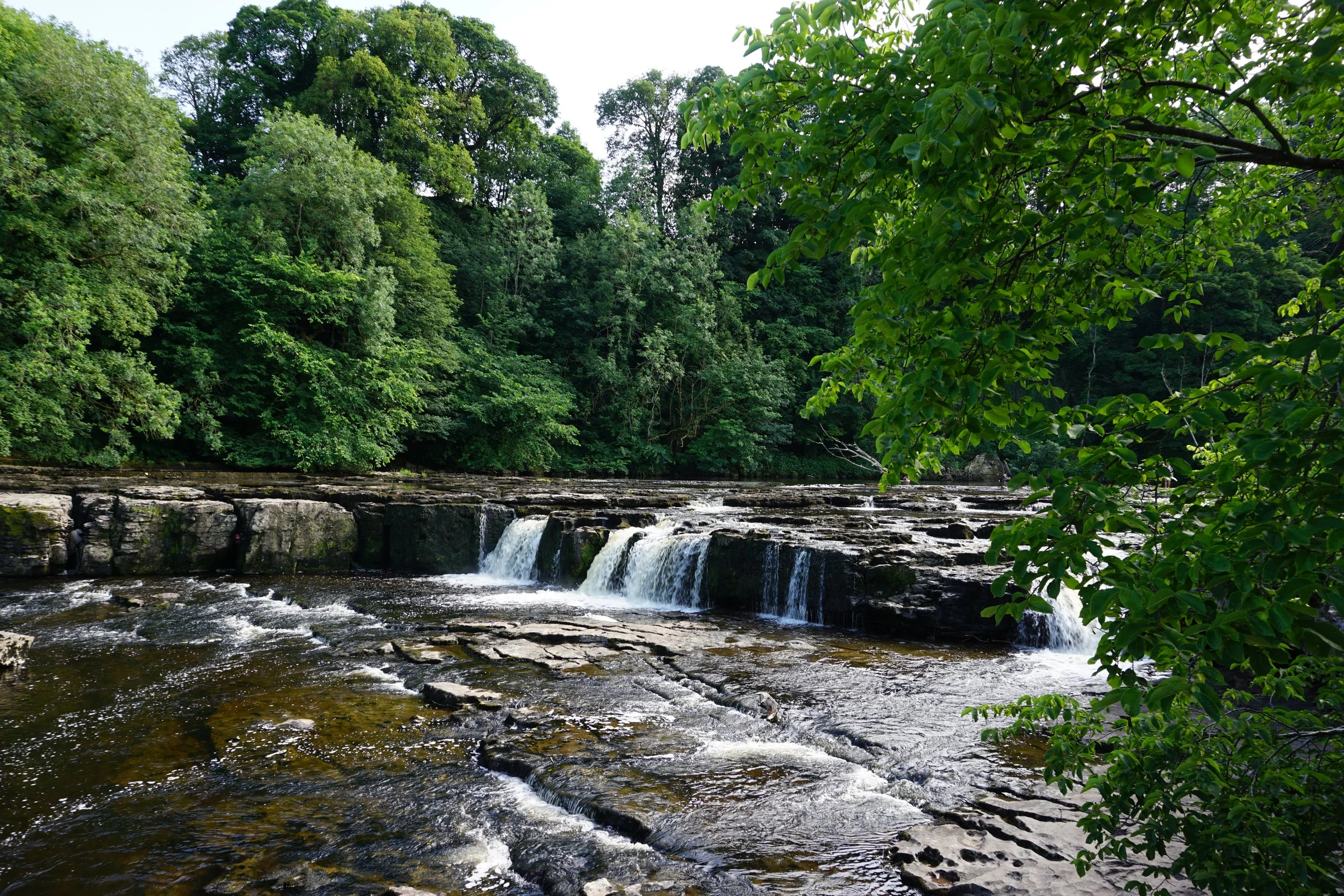
Aysgarth Falls, River Ure
Our take - in a nutshell
Natural flood management offers a rare triple-win: reduced flood risk, restored nature and resilient communities. But to unlock its full potential, we must invest in proving its long-term economic value. With better attribution, more flexible funding and a stronger focus on outcomes, NFM can move from fringe to frontline. One day, it may be possible to connect NFM projects in the headwaters, urban areas and coastal habitats to deliver a truly integrated approach from source to sea.
References:
1. https://researchbriefings.files.parliament.uk/documents/POST-PN-0709/POST-PN-0709.pdf
4. https://www.landcommission.gov.scot/our-work/good-practice/community-benefits-1/natural-course
6. https://www.cla.org.uk/cla-east-news/feature-transformative-land-use
8. https://www.unda.co.uk/news/record-uk-flood-insurance-claims-in-2024-rising-costs-and-risks/
11. https://defrafarming.blog.gov.uk/2023/11/29/round-two-projects/
12. https://landscapeenterprisenetworks.com/lens-locations/
13. https://landscapes.global/wp-content/uploads/2022/11/LENs-FINAL.pdf
15. https://www.plymouth.gov.uk/news/new-investment-partnership-aid-flood-risk